LAST HOPE
LAST HOPE
LAST HOPE
Website Design | Website Development
LAST
HOPE
LAST HOPE
Website Design | Website Development
Last Hope Website Development: A Pro Bono Project by Kola Digital
Not every website project starts with a commercial brief.
Sometimes it starts with a conversation.
That was the case with Last Hope Animal Charity. A volunteer-led organisation doing consistent work rescuing and rehoming animals, but without the digital setup to support it properly.
They did not need something flashy.
They needed something that worked.
At Kola Digital, this project became part of a wider initiative. Instead of waiting for funding, the decision was made early to take it on fully pro bono and remove that barrier altogether.
The Reality Behind the Challenge
Charities like Last Hope are often stretched in the same way.
Time is limited. Resources are limited.
Digital is usually the part that gets delayed.
Before this project, there were clear gaps:
- No structured way to present animals available for adoption
- Donation journeys were not optimised
- Volunteer applications were not streamlined
- Content updates were difficult to manage
None of these are unusual. But together, they slow everything down.
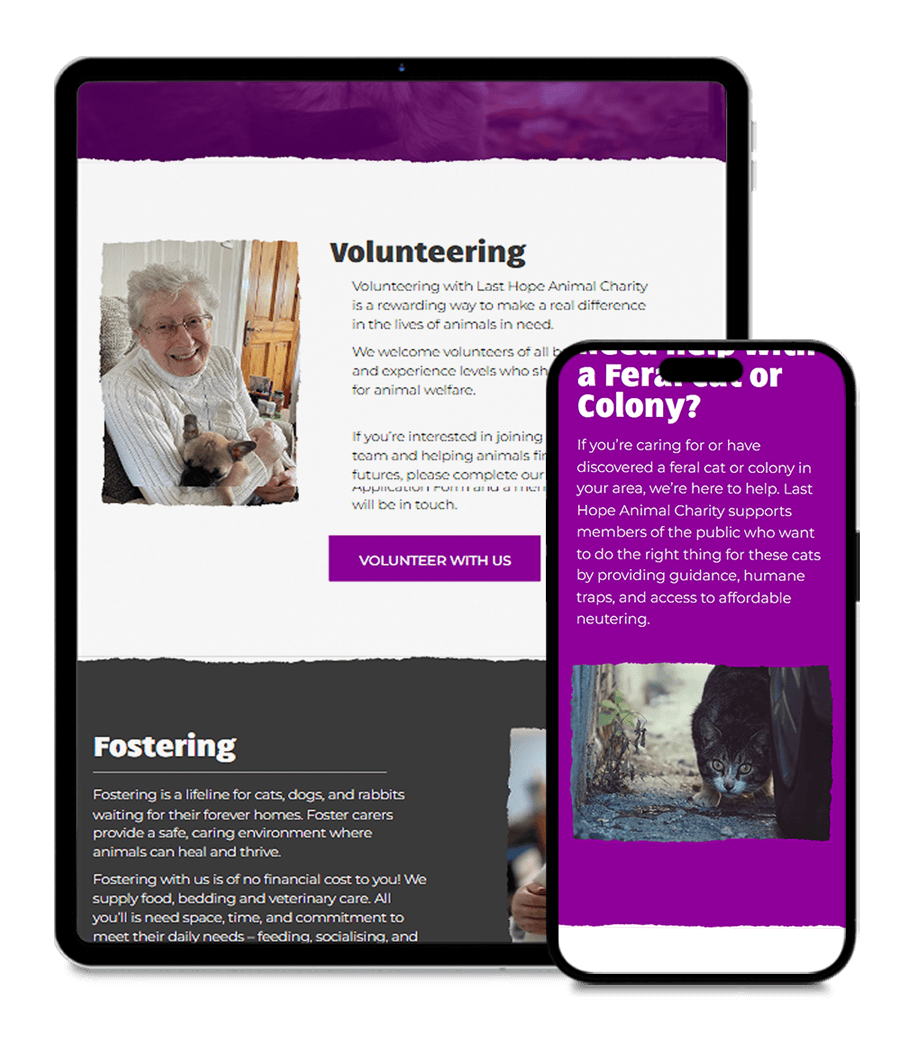
Charity Website Design Built Around Real Needs
Effective charity website design needs to consider how people actually use the organisation’s website.
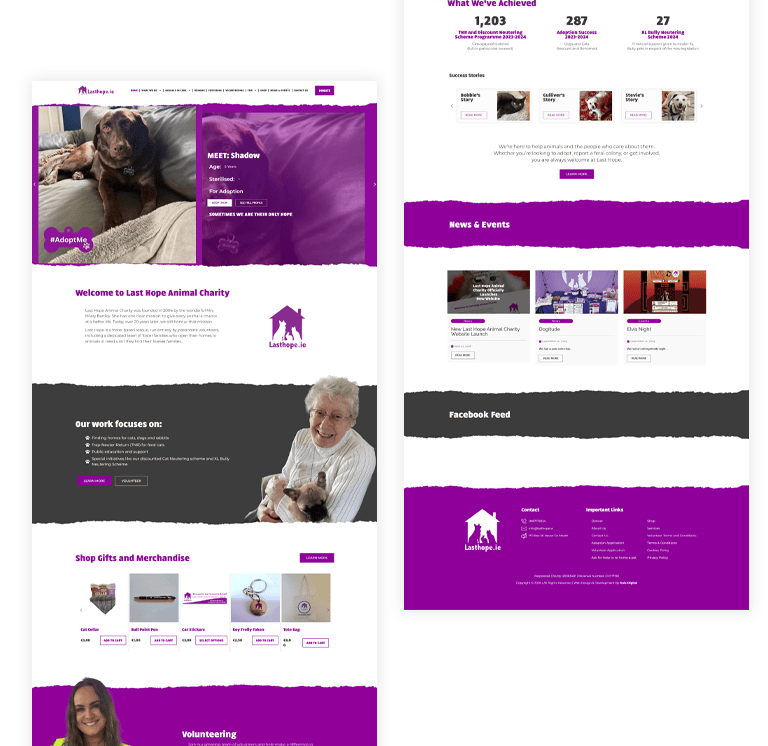
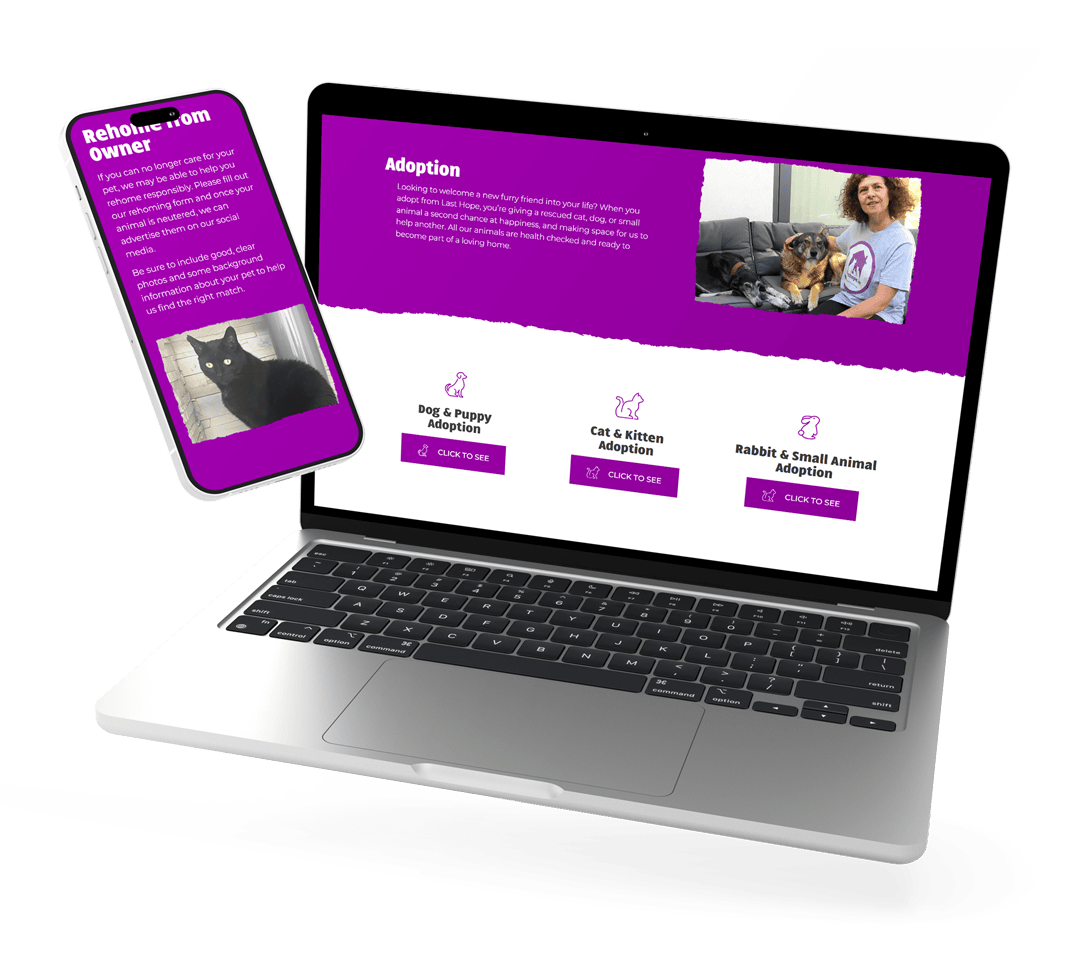
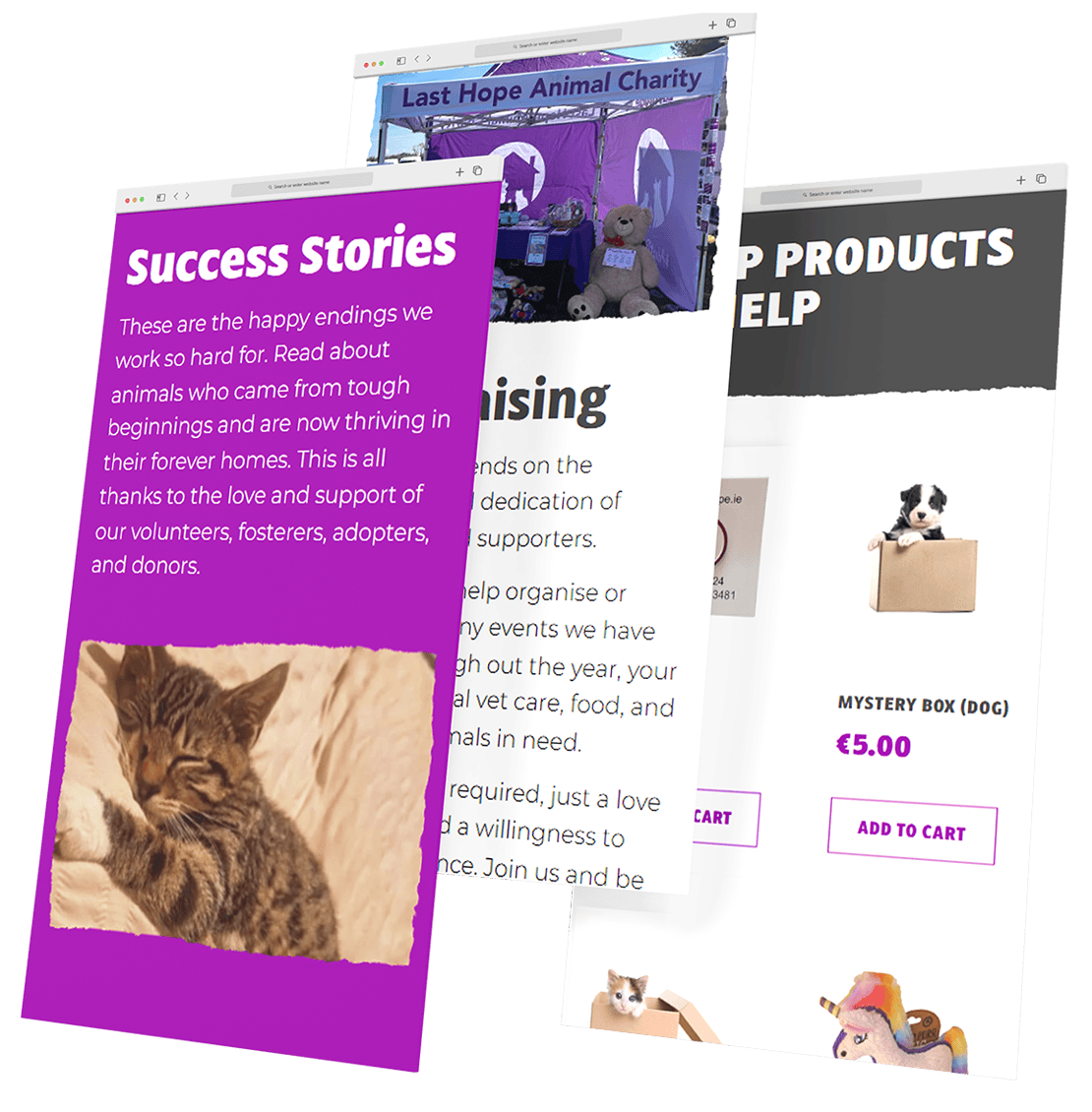
For Last Hope, that meant creating clear routes for adoption, fostering, volunteering and donations, while giving the team a website they could easily manage themselves.
The project shows how website design for charity organisations can go beyond visual design and create something that actively supports their day-to-day work.
This is where experience in website design Kildare projects becomes relevant.
Not just visual design, but understanding how people move through a site and what actions they take.
Approach and Build
The project did not follow a rigid process.
It moved in stages, with adjustments along the way.
Planning
Early work focused on how people actually interact with the charity:
- What makes someone decide to adopt
- What stops someone completing a donation
- Where users drop off
For a website for non profit organisations, understanding these journeys early in the process is particularly important.
The website needs to serve supporters, volunteers and the organisation itself without creating unnecessary steps.
Design
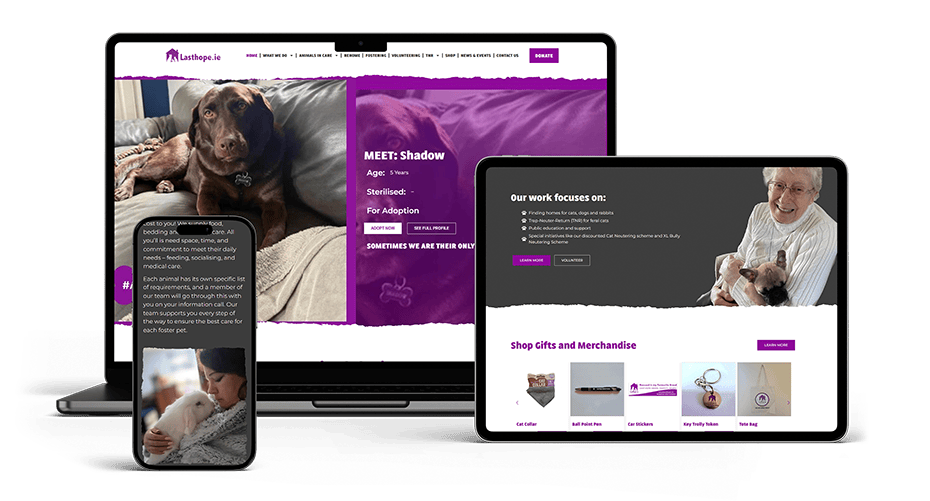
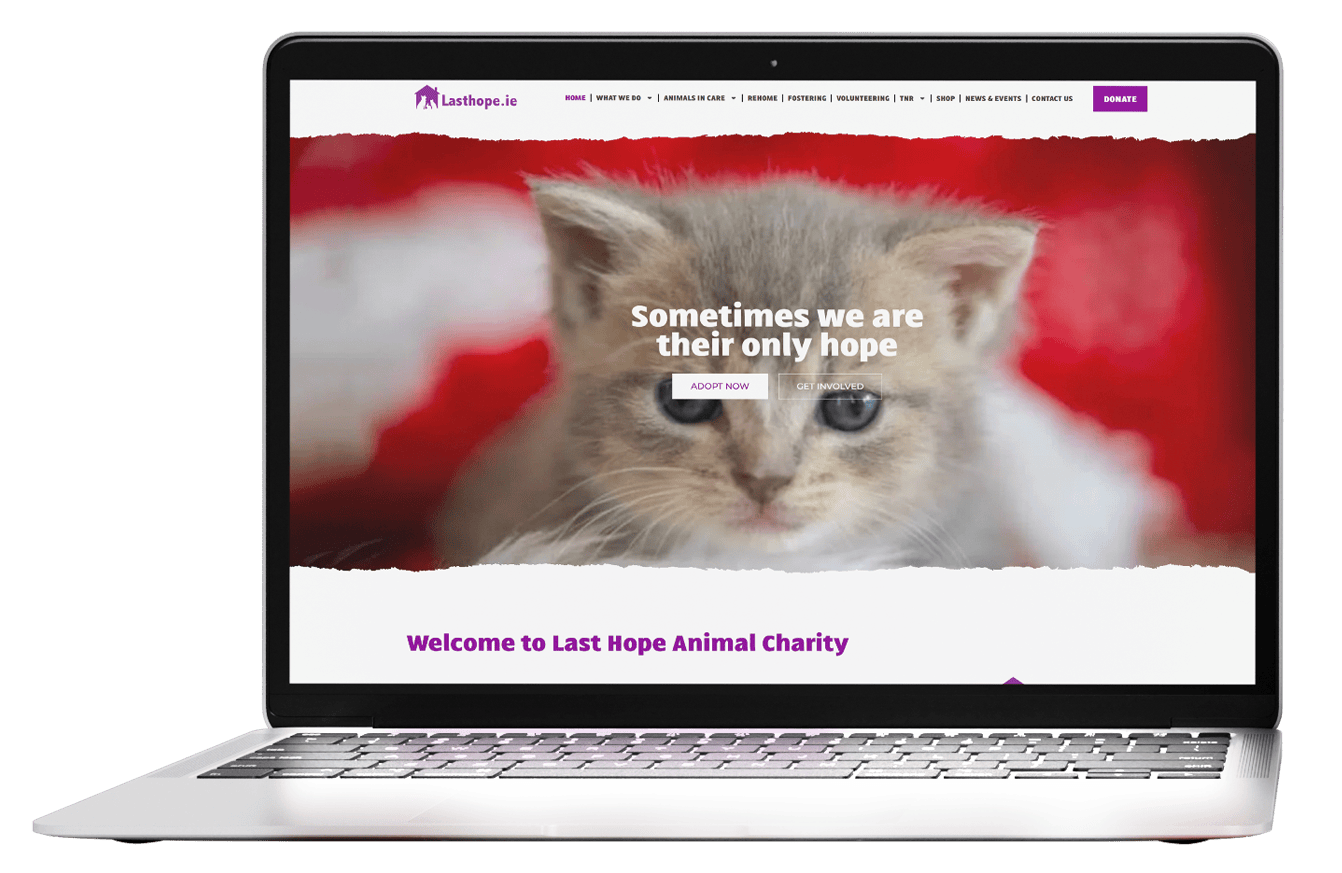
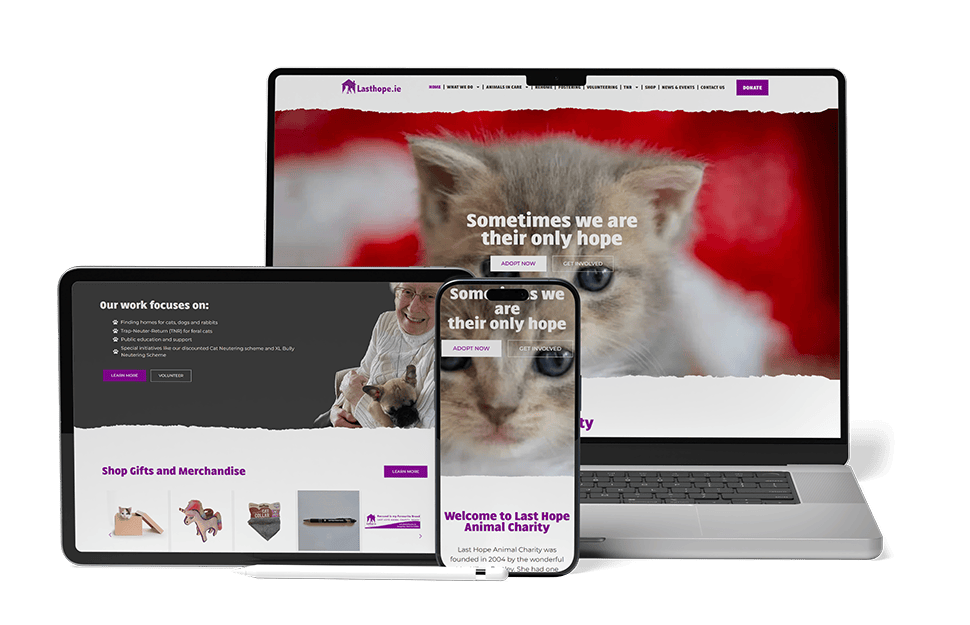
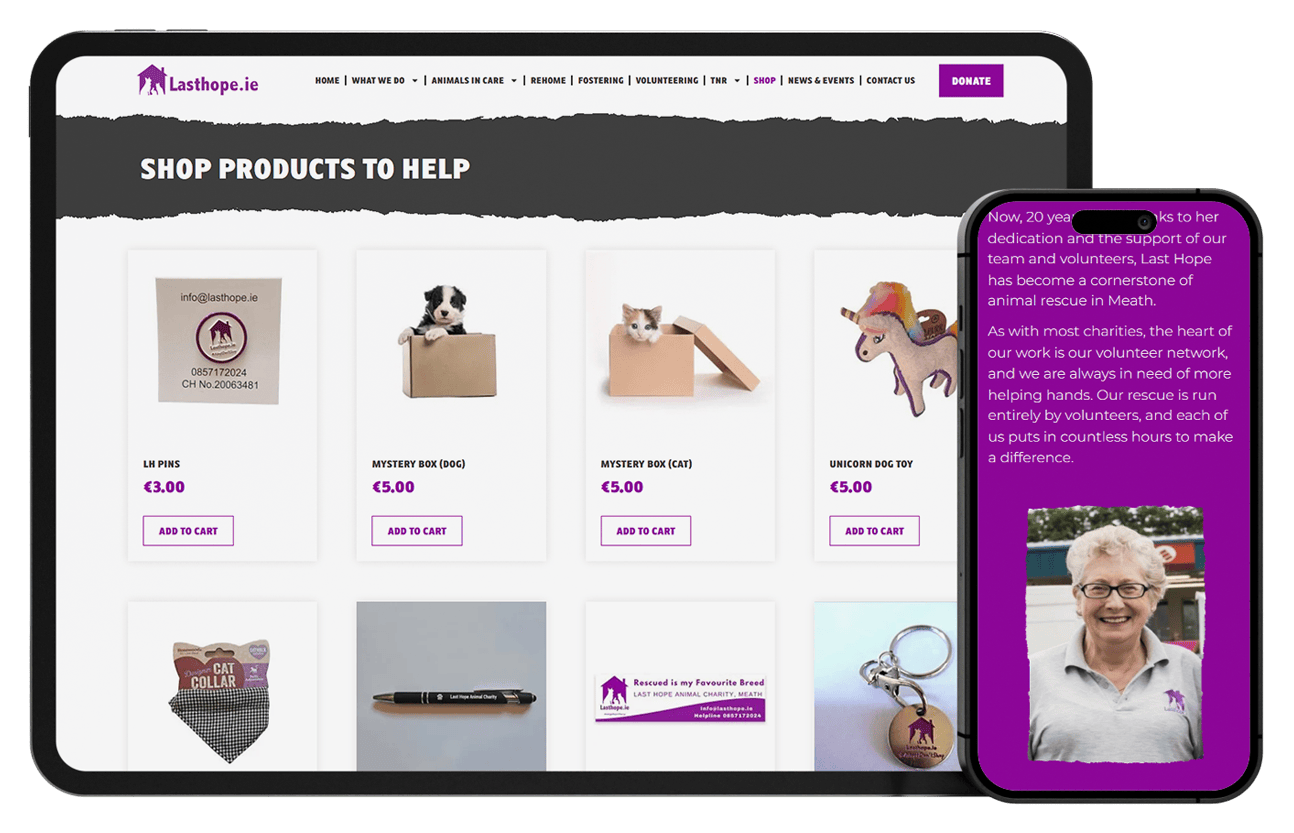
The design needed to feel accessible, not overworked. Clean layout. Clear navigation. Nothing distracting from the main purpose. Mobile use was prioritised from the start.
Looking at successful nonprofit organizations websites, the strongest ones make their purpose immediately clear and give visitors an obvious next step. That approach shaped the structure of the Last Hope website.
Development
The build focused on function. Key elements included:
- Individual animal profile pages
- Donation integration
- Volunteer and adoption forms
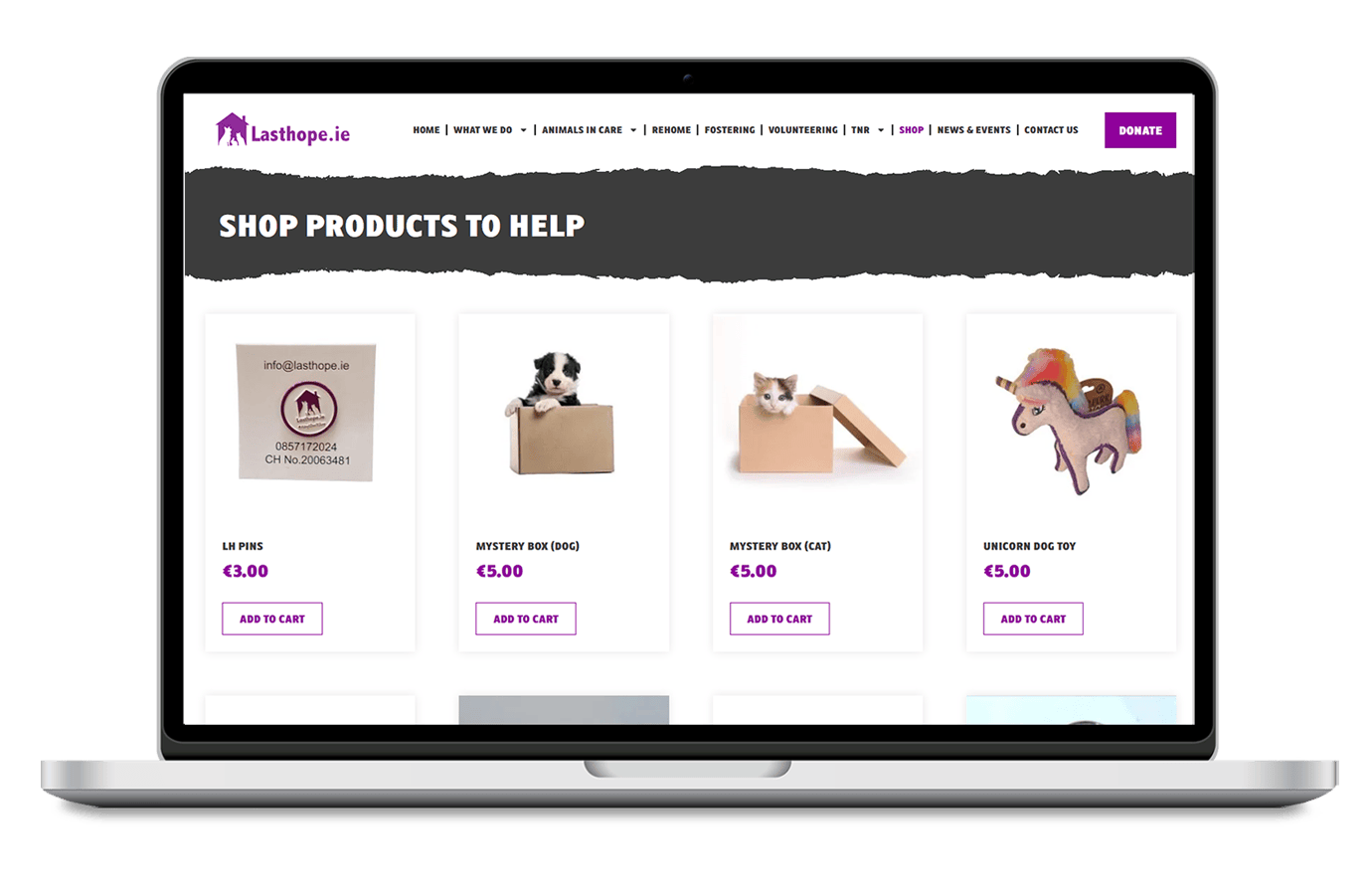
- An online shop
Each feature had a role. Nothing extra.
What Made the Biggest Difference
The individual animal pages changed how people engage. Each profile gives:
- Images
- Background
- Adoption details
Visitors are not just browsing. They are choosing.
For web design for charities, this type of functionality matters because the website needs to turn interest into meaningful action, whether that means adopting, donating, fostering or volunteering.
Results After Launch
The impact was visible:
- Volunteer applications improved
- Event visibility grew
- Adoption enquiries became more consistent
This came from usability, not just traffic. That is often the difference in effective web design naas kildare projects.
Results After Launch
The impact was visible:
- Donations increased
- Volunteer applications improved
- Event visibility grew
- Adoption enquiries became more consistent
This came from usability, not just traffic. That is often the difference in effective web design naas kildare projects.
Ongoing Support Matters
The site needed to be manageable. Training was provided so the team could update content, add animals, and manage campaigns without relying on external support. Ongoing improvements are still part of the process.
What Other Organisations Can Take From This
A few practical points stand out:
- A website should support real actions
- Simplicity performs better
- Mobile experience is essential
- Structure matters as much as design
These apply across sectors, including web design meath and website design meath projects where similar challenges come up.
These principles are particularly important when charity website designers are working with organisations that have limited internal resources and need their website to remain practical long after launch.
FAQs on Charity Website Design
Clarity. Visitors should know what to do straight away, whether that is donating, volunteering, adopting or learning more about the organisation.
It depends on the organisation, but clear calls to action, simple navigation, mobile accessibility, donation options and easy content management are important considerations for most charity websites.
Yes. A redesign can retain useful existing content while improving structure, usability, mobile performance and the actions visitors can take.
Ideally, routine content should be manageable internally. For Last Hope, training was provided so volunteers could add animals, update content and manage campaigns without depending on a developer for every change.
Website Design for Charities
and Nonprofits
If your charity or nonprofit needs a new website or is considering a website redesign in Ireland, Kola Digital can help create a practical website built around what your organisation and its users actually need.
From charity website design and development to ongoing support, we focus on websites that are easy to use, easy to manage and built with a clear purpose.
Get in touch to discuss your project.